Most singers assume warming up means singing louder or longer to “loosen up.” The truth? That approach often leaves your voice sounding fuzzy, not clearer. The real test for vocal warm ups for a clear voice is how well they line up your breath, onset, and vowel shape to create sharp coordination. Keep reading and you’ll learn the simple routine that wakes up your voice’s control so clarity arrives faster and sticks around through your whole session. Explore this 9-minute vocal warm-up guide.
Understanding vocal coordination is key to achieving clarity. Many singers fall into the trap of thinking that just making noise will get them ready, but as I’ve explored in my Vocal Warm Up Exercises: Stop Checking the Box and Start Solving Problems, it’s about organizing your voice in a way that sets you up for success.
Incorporating breath onset alignment and vowel shaping in singing into your routine can drastically change how you sound. If you find yourself frequently facing vocal fuzziness, focusing on these aspects might just be the solution. For a quick start, try our 10 Minute Vocal Warm Up: Wake the Voice With Intention to see immediate improvements.
Female singers, in particular, might benefit from adjusting their routine to suit their current vocal needs. Our guide on Female Warmups That Work: Start With Today’s Interference, Not Yesterday’s Routine provides insights tailored to dynamic vocal conditions.
As you explore these methods, remember that the goal is to reduce vocal fuzziness and improve resonance clarity. If your voice still feels foggy after these adjustments, consider booking an Expert Vocal Assessment at The Golden Voice. Let’s pinpoint the exact coordination that’s holding you back so you can sing with confidence and clarity.
Rethinking Vocal Warm Ups
Coordination Over Effort
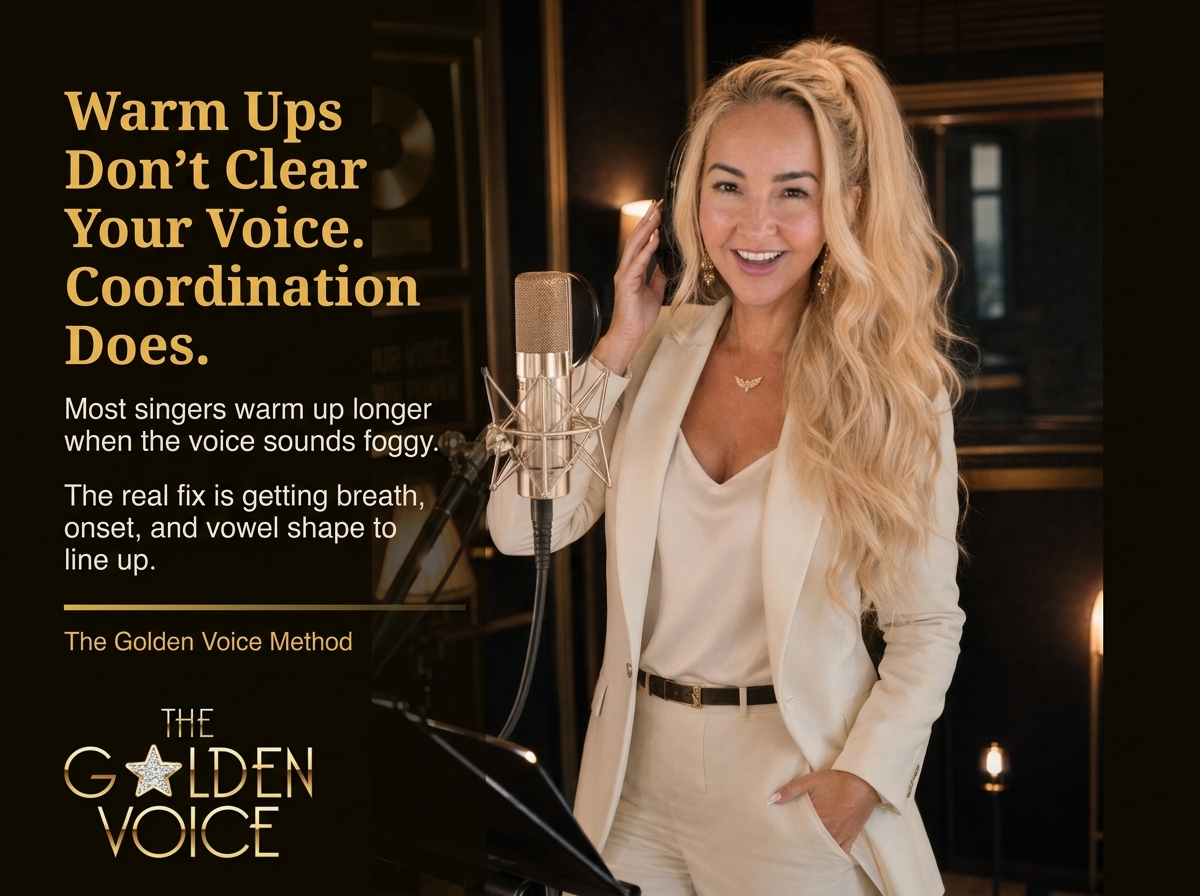
A clear voice doesn’t come from sheer effort. Instead, it’s about getting everything lined up just right. If you’re shouting your way through warm ups, you’re missing the magic. Instead, think coordination. When your breath, onset, and vowel shape are in harmony, your voice will thank you. This isn’t about loudness; it’s about control. Ready for some myth-busting?
Busting the Warm Up Myths
Many believe that warm ups are about singing harder or longer. But here’s the twist: that often leads to a fuzzy voice. Instead, focus on how your voice lines up. Think of it like tuning an instrument. When you’re off, you’re off. But when the breath, onset, and vowels are in sync, clarity sings through. So, stop pushing harder and start setting your voice up for success.
Why Clarity Matters
Clarity is more than just sounding nice. It’s about being heard and understood. A clear voice cuts through the noise, leaving a lasting impression. It’s the difference between a good performance and a show-stopper. So, why settle for muddled when you can shine with clarity?
The Science of Vocal Coordination

Breath Onset Alignment Tips
To get started, focus on your breath. It’s the engine of your voice. When you align your breath with your onset, magic happens. Start by taking a relaxed breath, then let your voice ease in. It’s not about force but flow. Try this: exhale gently on a quiet hum. Feel how your breath and voice blend. This sets the stage for a powerful, clear tone.
Vowel Shaping in Singing
Vowel shaping is your secret weapon. The way you form vowels can transform your sound. Start with simple exercises: say “ee” and “ah” while noticing how your mouth and tongue move. Fine-tuning these shapes makes your voice resonate beautifully. Remember, it’s not just about the sound, but the shape that carries it.
Mastering Onset Control Exercises
Onset control is where many singers struggle. Start with gentle exercises: whisper the beginning of a word before fully voicing it. This helps control how sound starts. Try it with different words and notice which feels most natural. The key is to start softly, then build up. This practice leads to a more controlled, clearer onset.
Building a Routine for Clarity
Reducing Vocal Fuzziness
The secret to a clear voice lies in reducing fuzziness. This starts with your warm-up routine. Focus on exercises that align your breath and voice. Try gentle humming or lip trills. These simple actions wake up your vocal cords without strain, setting the stage for clarity.
Clean Tone Exercises Explained
Clean tone exercises are your best friend. Begin with scales that focus on even sound. Use gentle slides and pay attention to your breath support. By keeping your tone smooth, you avoid harshness and maintain clarity. Practice this regularly, and you’ll notice a significant difference in your sound.
Designing Your Warm Up Sequence
Crafting the right sequence can change everything. Start slow and gentle, focusing on breath and onset alignment. Gradually introduce vowel shaping exercises. The goal is to create a routine that prepares your voice without exhausting it. This sequence not only warms you up but keeps your voice clear and ready for any performance.
Frequently Asked Questions
How can I improve my vocal clarity quickly?
Focus on aligning your breath, onset, and vowel shaping during warm-ups. Simple exercises like humming and lip trills can significantly enhance clarity.
What are some effective vocal warm ups for a clear voice?
Exercises like gentle humming, lip trills, and vowel shaping help align your voice for clarity. Practicing these regularly will improve your tone.
Why does my voice sound fuzzy even after warming up?
If your voice sounds fuzzy, it might be due to misaligned breath and onset. Focus on exercises that coordinate these elements for a clearer sound.
How do vowel shapes affect my singing?
Vowel shapes play a crucial role in resonance and clarity. By focusing on forming vowels correctly, your voice will carry more strongly and clearly.
What’s the best way to start a warm up routine?
Begin with gentle exercises that focus on breath and onset alignment. Gradually incorporate vowel shaping to prepare your voice for clear and confident singing.