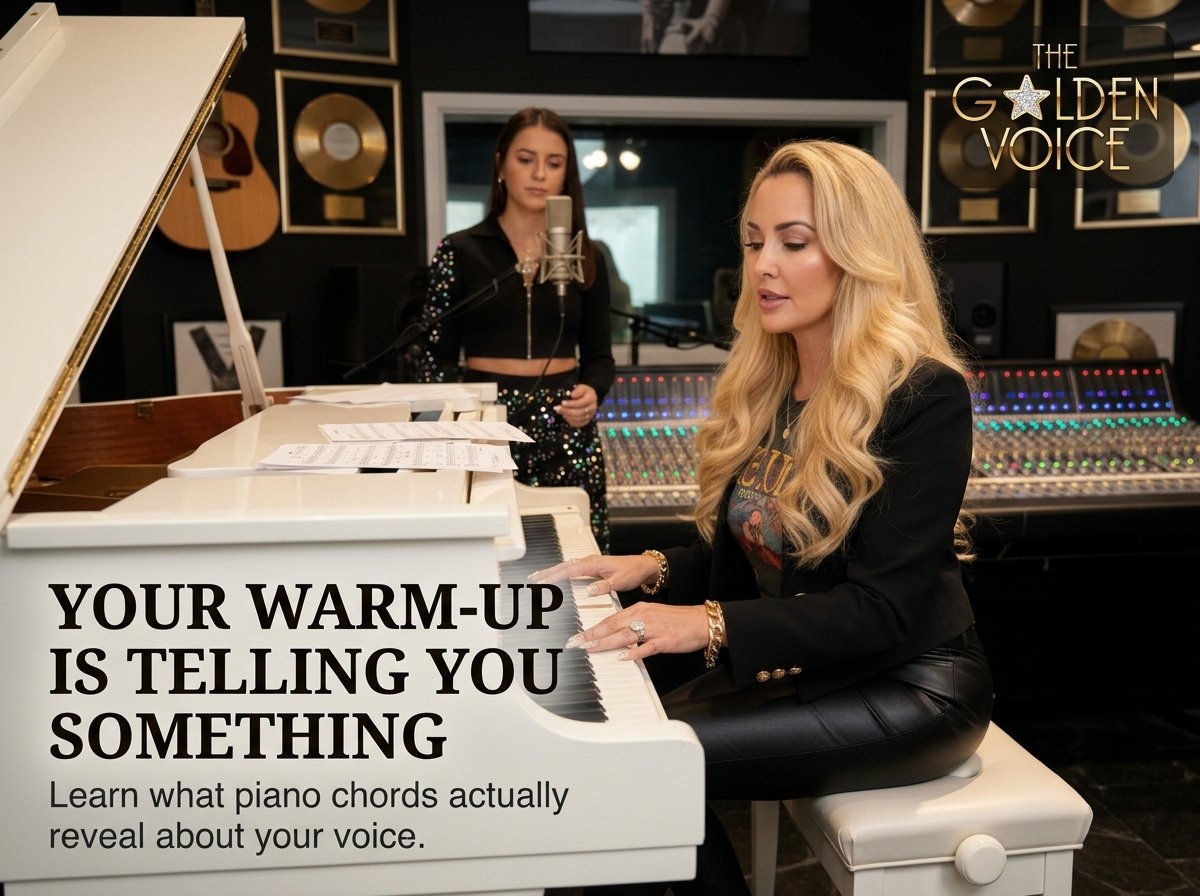
Most singers treat vocal warm-ups like a simple check-the-box routine to get loose. But if you’re only matching pitch to piano chords, you’re missing what those chords can really tell you about your voice. Using vocal warm up piano chords the right way gives you a quick snapshot of how your voice is coordinating, where tension hides, and how cleanly your sound starts—before you even sing a full phrase. This isn’t just warming up; it’s a fast vocal check-in that cuts guesswork and sets you up for better control in rehearsal or the studio. For more insights, check out this vocal warm-up guide.
Rethink Your Vocal Warm-Up
Warming up isn’t just about loosening up. When done right, it can reveal a lot about your voice’s state.
Beyond Pitch Matching: The Real Goal
Most people think warm-ups are just about getting the notes right, but they’re so much more. Using piano chords for singers can expose how your voice is working. You can tell if you’re coordinating well or if there’s something off. When you listen closely, those simple chords become a valuable tool. They help you see where you need to focus your practice. By understanding the voice better, you can tailor your warm-up to what’s needed right now.
Quick Technical Check-In with Chords
Before diving into full songs, using piano chords as a warm-up offers a quick technical check-in. This isn’t just playing notes; it’s about reading your voice’s signals. You can recognize if your voice is balanced across registers or if there’s a pull towards tension. Start by playing a few simple chord patterns and listen to how your voice responds. Are there spots where the sound feels stuck or weak? This initial check helps pinpoint areas to adjust before tackling more complex pieces.
Key Benefits of Piano Chords

Piano chords provide more than just a warm start. They help you read what’s happening with your vocal cords.
Diagnosing Vocal Coordination
Playing chords while singing offers a chance to see how well your voice is coordinating. It’s like a mirror for your vocal technique. Start with a simple chord and sing a matching note. Are you able to hold it steady? If not, this might indicate coordination issues. You can use this as a cue to adjust your technique. By focusing on vocal coordination exercises, like matching chord progressions, you can improve this over time. This method helps you spot coordination problems before they become bigger issues in full songs.
Identifying Tension and Onset Issues
When you use piano chords in warm-ups, they also help identify tension and onset issues. Often, tension sneaks in without us noticing. By playing a chord and singing along, you can feel where your body holds unnecessary tension. Pay attention to how your voice starts each note. Does it glide in smoothly or catch at the beginning? This is vital for ensuring clean onsets and reducing vocal tension. Recognizing these signs early lets you make necessary adjustments.
Building an Effective Routine

A good routine doesn’t need to be long; it needs to be smart. Focus on what your voice tells you.
Simple Chord Patterns to Use
To build an effective routine, start with simple chord patterns. They don’t need to be complicated to be useful. You might begin with major and minor triads, which are great for checking resonance placement. Rotate through different keys, as this adds variety and keeps your voice from getting too comfortable. Changing keys frequently can help you maintain flexibility across your range. This simple yet focused approach ensures your warm-up remains effective without becoming a mindless task.
Listening for Vocal Cues
Listening is a crucial part of a productive warm-up routine. As you go through your chords, listen for vocal cues that indicate what needs attention. Is there a particular note where your voice breaks or feels weak? This could be your passaggio check point. Are some notes more challenging to start cleanly? This signals you might need to work on vocal onset control. Monitoring these cues helps you adjust your routine to fit your needs, making it truly a vocal assessment routine.
Frequently Asked Questions
How do piano chords help with vocal warm-ups?
Piano chords serve as a diagnostic tool, offering immediate feedback on how your voice is coordinating. They help you identify tension, onset issues, and provide a clear assessment of your vocal condition before diving into full songs.
What are some simple chord patterns I can use for warming up?
Start with basic major and minor triads. These patterns are easy to play and provide a good foundation for vocal warm-ups. You can experiment with different keys to maintain vocal flexibility.
How can I tell if there’s tension in my voice during warm-ups?
Listen for signs like a strained sound or difficulty starting notes smoothly. These indicate tension or onset issues. By identifying these areas, you can focus on techniques to reduce vocal tension.
Why is vocal coordination important for singers?
Good vocal coordination ensures that your voice functions smoothly across different exercises and songs. It helps you maintain control, reduce strain, and deliver a more polished performance.
What should I listen for during a warm-up to assess my voice?
Pay attention to how your voice feels and sounds. Listen for any breaks, weak spots, or rough onsets. These cues help you determine which areas need focus, ensuring your warm-up provides the insight you need.
For more insights on effective warm-ups, check out our 10 Minute Vocal Warm Up: Wake the Voice With Intention.