
Most male singers think high notes require more air, more volume, or more effort. Usually, the opposite is true. Strain on high notes is often a coordination problem involving onset, airflow, vowel shape, resonance, and the male passaggio. At The Golden Voice, we teach singers to identify exactly where that coordination begins to break down so they can fix the cause instead of pushing through the symptom.
Addressing High Note Strain
Common Misconceptions and Real Fixes
When you’re tackling the challenge of singing high notes without strain, the first step is understanding what actually changes when tension sets in. Many singers assume they need to push harder, but what you really need is better coordination.
The Golden Voice Method™ teaches that the interference often comes from setup and coordination problems. In coaching sessions, we frequently see male singers reaching for notes by tightening the throat instead of adjusting the balance of effort. That makes high notes feel harder than they need to be. The goal is to identify where the strain begins and make specific adjustments such as onset coordination, breath balance, and vowel modification.
Practical Steps to Reduce Strain
For practical steps, start by running a checkpoint: identify where the strain starts, and then try singing a gentle scale to that pitch. Focus on making one change at a time, like a lighter onset or reduced jaw tension. This focused approach can make a significant difference. For an in-depth exploration, read How Male Singers Actually Get Higher Notes: Fix Coordination, Not Force.
This method not only helps in reducing strain but also strengthens your ability to sing higher without pushing. Remember, it’s about fine-tuning the interplay between your larynx stability and breath flow, especially around the tricky male passaggio. By addressing these coordination issues, you can transform your frustration into progress and achieve clarity in your high notes.
For more resources and a structured approach, visit The Golden Voice.
Understanding Vocal Strain
To sing high notes without strain, understanding what causes tension is crucial. It’s not about pushing more air; it’s about the setup of your voice.
Common Misconceptions in Singing
Many male singers assume high notes require more force or volume. In reality, pushing harder often creates more tension. The goal is better coordination, not more effort.me louder is better, but it’s not true. The key is in your technique, not your volume.
Identifying Strain in Your Voice
Listening to your body is essential. If you feel tension or tightening, it’s a sign. The strain usually starts when you reach for a note by tightening the throat. Instead, pay attention to how your voice feels and sounds. Practicing with awareness can help you identify these points of tension.
Techniques to Sing High Notes

Once you understand the source of strain, you can move on to techniques that help you reach those high notes comfortably.
Onset Coordination and Breath Flow
The onset of a note sets the tone for how the rest of it will sound. Instead of pushing, consider how you start your notes. Good onset coordination involves a balanced start, where the breath flow is steady but not forceful. This approach reduces pressure on your vocal cords.
Vowel Modification and Throat Tension
Modifying vowels can make a huge difference. Sometimes the shape of your mouth affects how you hit a note. Adjusting your vowels can help ease throat tension. Practice singing with different vowel shapes to see which ones reduce strain.
Applying The Golden Voice Method™
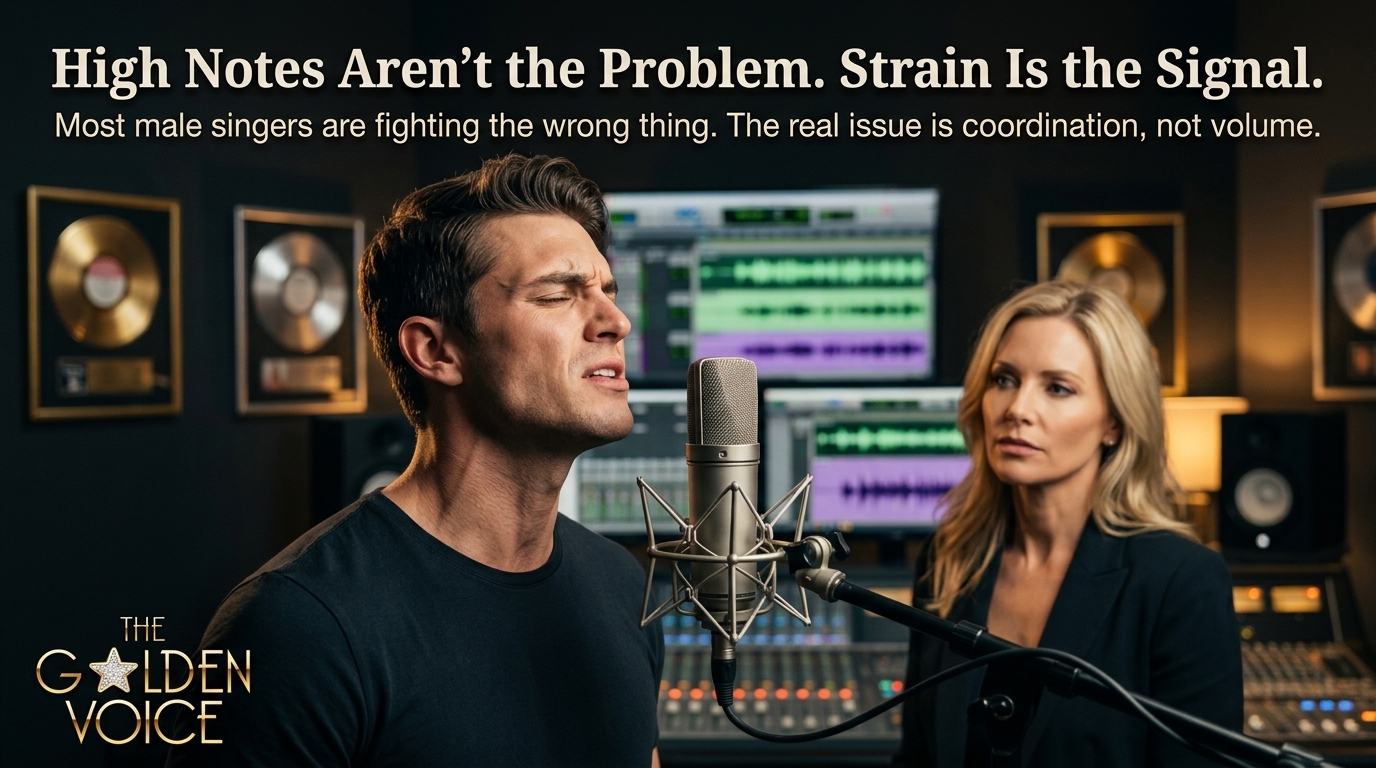
To effectively sing high notes, apply a method that focuses on identifying and correcting specific issues.
Recognizing Male Passaggio Challenges
The passaggio is a transition point that can be tricky. For male singers, managing this transition smoothly is key. Recognizing when you’re moving through this area and adjusting your technique can help.
Mapping Your Next Steps with Confidence
Once you’ve identified the problem areas, create a plan. Start by practicing with specific exercises that address your unique challenges. Confidence comes from knowing what to fix and how to fix it.
Frequently Asked Questions
What causes strain when singing high notes?
Strain often comes from improper vocal coordination and tension in the throat. It’s not about force or volume but about technique.
How can I reduce throat tension?
Focus on onset coordination and breath flow. Adjusting vowel shapes can also help alleviate tension.
What is the male passaggio, and why is it challenging?
The passaggio is a transition between vocal registers. It’s challenging because it requires precise coordination to navigate smoothly without strain.
Can vowel modification help with high notes?
Yes, modifying vowels can help reduce strain and make high notes more accessible by adjusting the shape of your vocal tract.
Why is breath flow important in singing?
Breath flow provides the necessary support for sound production. Proper breath management can prevent strain and improve vocal quality.