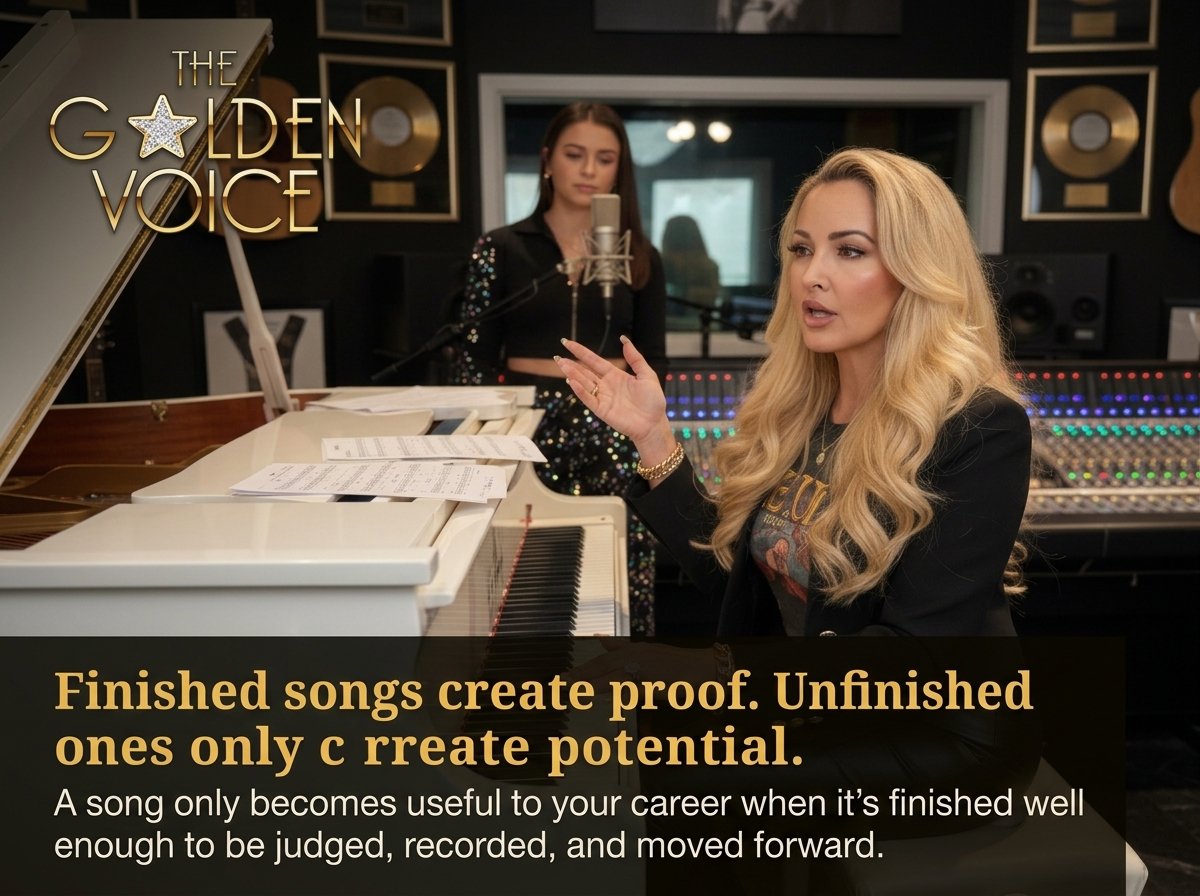
You’ve got a hard drive full of half-finished demos. Each song feels like a good idea, but none of them are doing the work they should. When songs stay unfinished, they stall your career instead of pushing it forward. Knowing when a song is “finished enough” is the key to moving from endless revision to real progress in your songwriting workflow. Let’s break down how to finish your song so opportunity sees proof of work, not just potential. If you want to understand how The Golden Voice takes a song from an idea to a finished record, explore our song production process
The Value of Finished Songs
Finishing a song is more than just an end goal; it’s an essential step in showcasing your talent to the world. Let’s explore how leaving songs unfinished can hold you back.
Stalled Opportunities in Unfinished Work
Unfinished songs are like dreams waiting to become a reality. They’re full of potential but can’t move your career forward unless completed. Imagine sending a demo to a producer, but it’s only half done. They can’t see your full vision or assess your skills properly. An unfinished song is a missed chance to prove your capabilities. This lack of completion can lead to missed opportunities and stalled growth in your music career.
Defining “Finished Enough” for Artists
“Finished enough” means a song is polished to the point where it communicates your artistic intent clearly. It doesn’t need to be perfect, but it should be complete in structure and emotion. When you reach this stage, you’re ready to share it for feedback, recording, or performance. A “finished enough” song captures the essence of your message and gives listeners a full experience. It allows you to move forward with confidence, knowing that your work can stand on its own.
Real-World Benefits of Song Completion
Completing songs brings tangible benefits. First, it creates a portfolio you can share with potential collaborators, producers, or labels. Second, it provides a sense of accomplishment and boosts your confidence. Lastly, finished songs open doors to performance opportunities and licensing deals. The more you complete, the more you develop your skills, resulting in a stronger artistic identity. By finishing your songs, you transform possibilities into actual achievements.
Building a Song Completion Workflow

Creating a structured workflow can help you move from demos to finished songs efficiently. Let’s explore key steps and decisions involved in this process.
From Demo to Release: Key Steps
The journey from demo to release involves several crucial steps. Start by recording rough demos to capture your ideas. Next, refine your song’s structure and lyrics. Ensure each section flows seamlessly into the next. After structure, focus on arrangement and instrumentation. Decide on the instruments that best convey your message. Once the arrangement is set, it’s time for vocal comping. Choose the best vocal takes to convey emotion and clarity. Finally, mix and master your track for release, ensuring it sounds professional and polished.
Song Structure Decisions and Lyric Finalization
Deciding on a song structure is critical. Whether it’s verse-chorus-bridge or an unconventional pattern, choose a structure that enhances your message. Lyrics should be finalized with attention to detail and emotion. They should resonate with listeners and convey your story effectively. Take time to rewrite and refine until every word feels right. A well-structured song with powerful lyrics can captivate and connect with your audience.
Effective Arrangement Mapping and Vocal Comping
Arrangement mapping involves deciding how each part of your song will sound. Consider dynamics, tempo, and instrumentation. Each element should serve the song’s overall feel and message. Vocal comping is about selecting the best vocal performances for each section. Listen for takes that convey the right emotion and clarity. A well-arranged song with strong vocal comping delivers a powerful listening experience.
Overcoming Revision Paralysis

Facing endless revision can be daunting, but practical steps can help you move forward and finish your songs.
Setting Practical Completion Checkpoints
Setting checkpoints can prevent endless revisions. Decide on clear milestones during your writing process. For example, set a deadline for completing lyrics or finalizing the arrangement. Having checkpoints keeps you accountable and focused on progress. It also allows you to assess your song’s readiness and make necessary adjustments. With practical checkpoints, finishing your song becomes achievable.
Leveraging Producer Feedback and Studio Prep
Producer feedback is invaluable in refining your song. Share your work with trusted producers for constructive criticism. Their insights can highlight areas for improvement you might have missed. Studio preparation is also crucial. Ensure your song is ready for recording by rehearsing vocal takes and finalizing arrangements. Proper preparation results in a more seamless studio experience, saving time and resources.
Creating Momentum in Your Music Career
Finishing your songs creates momentum in your music career. Each completed track strengthens your portfolio and boosts your confidence. It also opens doors to new opportunities, such as performances and collaborations. The more you finish, the more you grow as an artist. Each finished song is a step toward achieving your musical goals and building a sustainable career. Don’t wait for the perfect moment; start finishing your songs today.
Frequently Asked Questions
How do I know when a song is finished enough?
A song is finished enough when it clearly communicates your artistic intent. It should have a complete structure, polished lyrics, and a cohesive arrangement. If it conveys the intended emotion and message, it’s ready to be shared.
What steps should I take to finish a song effectively?
Start by recording rough demos and then refine the song’s structure and lyrics. Work on the arrangement and select the best vocal takes. Finally, mix and master the track for release. Setting practical checkpoints can help you stay on track.
How can I overcome the fear of finishing a song?
Overcome fear by setting clear completion checkpoints and seeking feedback from trusted producers. Remember, a song doesn’t have to be perfect to be finished. Focus on communicating your message and let the song evolve with feedback and experience.